
B10 vs B16 Circuit Breaker? Simple Rule: 1.5mm²→B10, 2.5mm²→B16
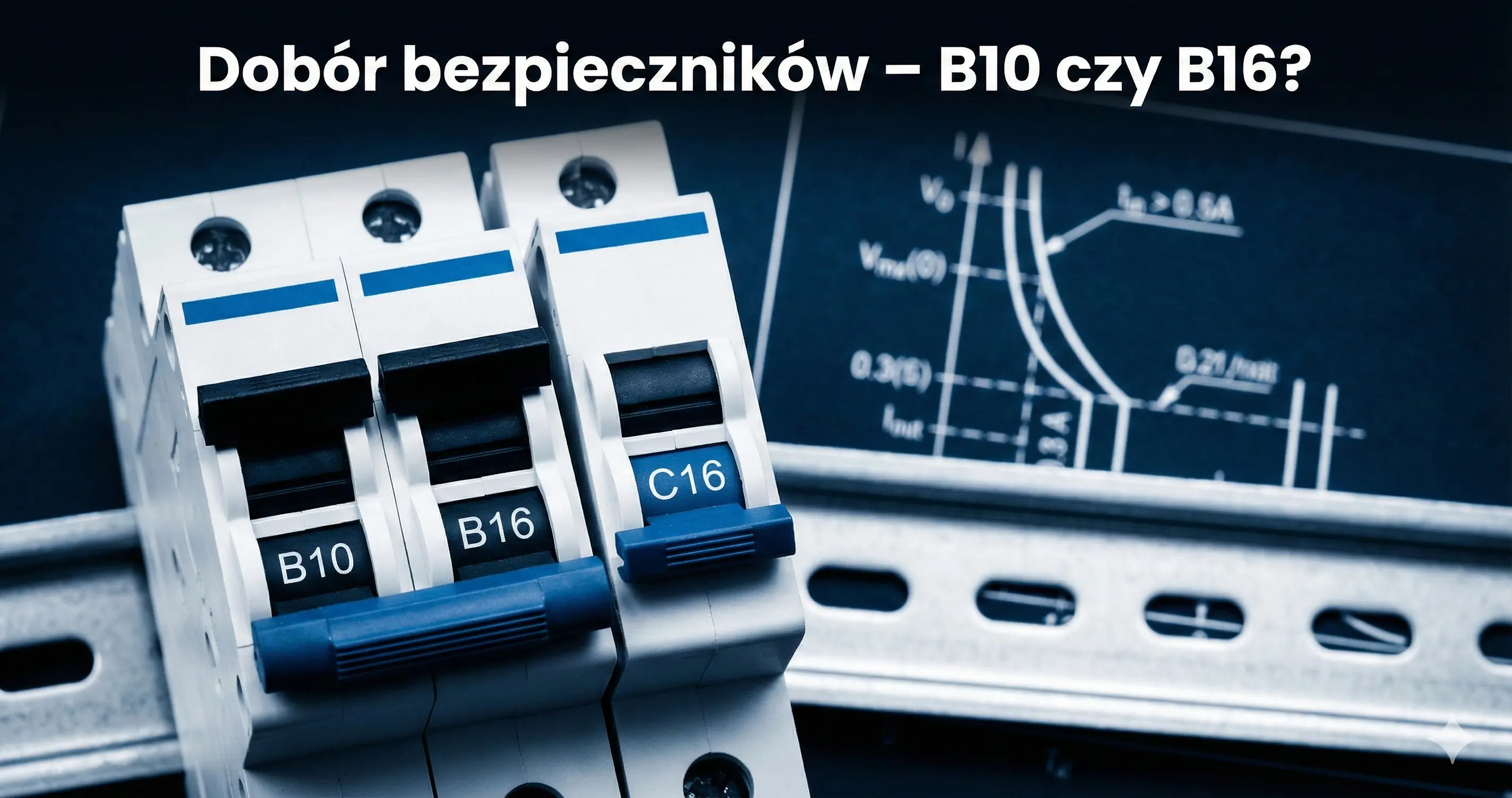
Circuit breakers (technically: miniature circuit breakers or MCBs) protect your electrical installation from damage due to overload or short circuit. Circuit breaker selection isn't guesswork – it's governed by strict rules of physics and electrical standards.
The best results come when breaker sizing is done inside a full electrical design workflow, not as an isolated rule-of-thumb check after cables have already been chosen.
The Golden Rule of Selection
The most important rule is: Select the protection device for the cable, and the cable for the load. Never the other way around! Installing a larger breaker when it "keeps tripping" without upgrading the cables is a direct path to fire.
Which Breaker for Which Cable?
In typical domestic installations (concealed wiring):
- Lighting (1.5mm² cable): B10 breaker (10A). Sometimes B6. Using B16 with 1.5mm² cable is often a mistake, though it depends on installation method.
- Sockets (2.5mm² cable): B16 breaker (16A). This is standard for general socket circuits.
If you are still unsure about conductor sizing, verify it with the cable selection guide before finalizing the breaker.
B or C Characteristic?
The letter before the amperage (e.g., B16) indicates the time-current characteristic.
- B (fast): Standard for homes. Protects resistive devices (heaters, bulbs) and cables.
- C (time-delayed): Used for devices with high inrush current (motors, welders, large transformers). Rarely used in homes, perhaps in garages.
Motor-driven equipment is the main exception. For a dedicated heat pump electrical installation, for example, C-characteristic devices are often more appropriate than standard B-curve breakers.
Our system in Electro Planner has a built-in algorithm that suggests correct circuit breaker selection based on circuit type, device power, and cable assumptions, making it easier to keep planning and documentation consistent.
FAQ
What is the difference between B10 and B16 circuit breakers?
A B10 breaker has a 10A rated current and protects 1.5mm² cables used for lighting circuits. A B16 breaker has 16A rated current and protects 2.5mm² cables used for socket circuits. The B characteristic trips at 3-5 times rated current per IEC 60898-1.
What is the difference between B and C characteristic circuit breakers?
B-characteristic breakers trip at 3-5× rated current and suit resistive loads (lighting, heating). C-characteristic breakers trip at 5-10× rated current and suit inductive loads (motors, air conditioners) with high startup currents.
Which circuit breaker for a 2.5mm² cable?
A 2.5mm² cable requires a B16 (16A) circuit breaker. This combination provides correct protection per PN-HD 60364-4-43, matching the cable's thermal withstand capacity.
Want to design your electrical installation?
Try our Electro Planner app and create a professional project in minutes. Avoid mistakes and save time.
Start free project