Three-Phase vs Single-Phase Installation | Power & Cost Comparison 2026
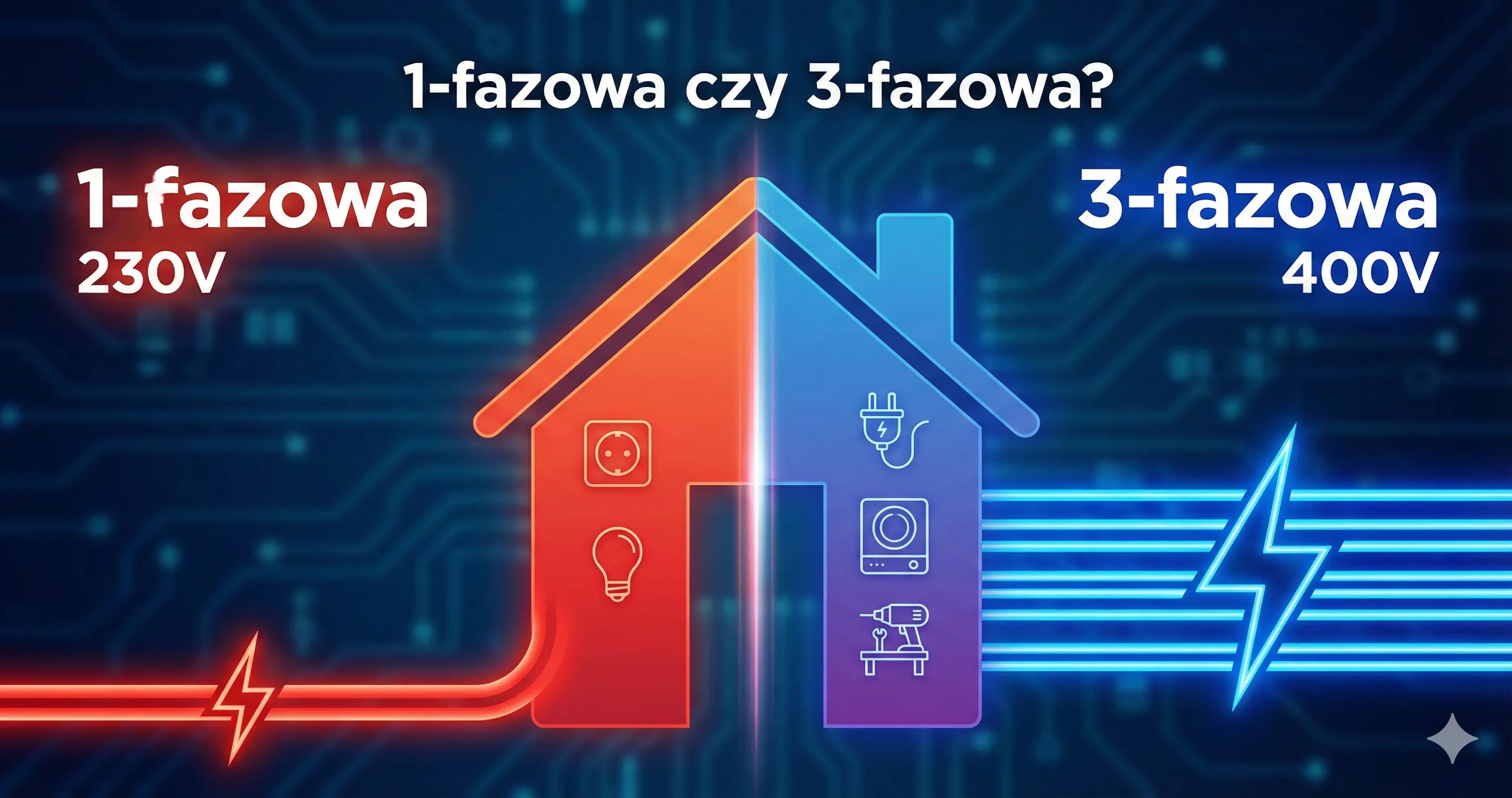
The decision about connection type is usually made early in construction. Increasingly, three-phase installations are becoming standard. Why? When is three-phase power essential?
Single-Phase Limitations
In a single-phase (120V or 230V depending on region) installation, the entire house load runs through one supply conductor. The maximum power available is typically around 5-7kW. That's definitely not enough if you're planning an induction hob, electric kettle, and washing machine running simultaneously.
Three-Phase Advantages
- Higher power capacity: You can request 12kW, 16kW, or even 25kW or more.
- Load distribution: You can divide circuits across three independent phases (e.g., L1 - kitchen, L2 - ground floor, L3 - first floor). This means turning on the washing machine doesn't dim the lights.
- Three-phase appliances: Induction hobs, heat pumps, workshop tools, and EV chargers work better and more efficiently on three-phase power.
Phase Balancing
The key to an efficient three-phase installation is even loading of all phases. Avoid situations where one phase is overloaded while the other two are "resting."
The Electro Planner app features unique automatic phase balancing. Enter your devices, and the system suggests how to connect them to the distribution board for symmetric loading.
Related Guides
Also see: Electrical Installation Software, Heat Pump Electrical Installation and Solar Panels at Home – How to Prepare Your Electrical Installation?.
FAQ
When should I choose 3-phase electrical installation?
Choose 3-phase (400V) when total power demand exceeds 7.2kW on any single phase, or when you plan to install a heat pump above 3.5kW, a 3-phase EV charger, or industrial machinery. Single-phase (230V) is sufficient for most apartments under 80m².
Is 3-phase installation more expensive?
A 3-phase installation costs approximately 20-30% more than single-phase due to the larger distribution board, additional cable runs, and 3-phase meter. However, it eliminates costly workarounds for high-power applications.
Can I upgrade from single-phase to 3-phase later?
Upgrading requires replacing the entire distribution board, all main cables from the meter, and renegotiating the grid connection. It is significantly cheaper to install 3-phase from the start if there is any chance of needing it.
Want to design your electrical installation?
Try our Electro Planner app and create a professional project in minutes. Avoid mistakes and save time.
Start free project