
Electrical Installation Planning | Complete Guide for Single-Family Homes
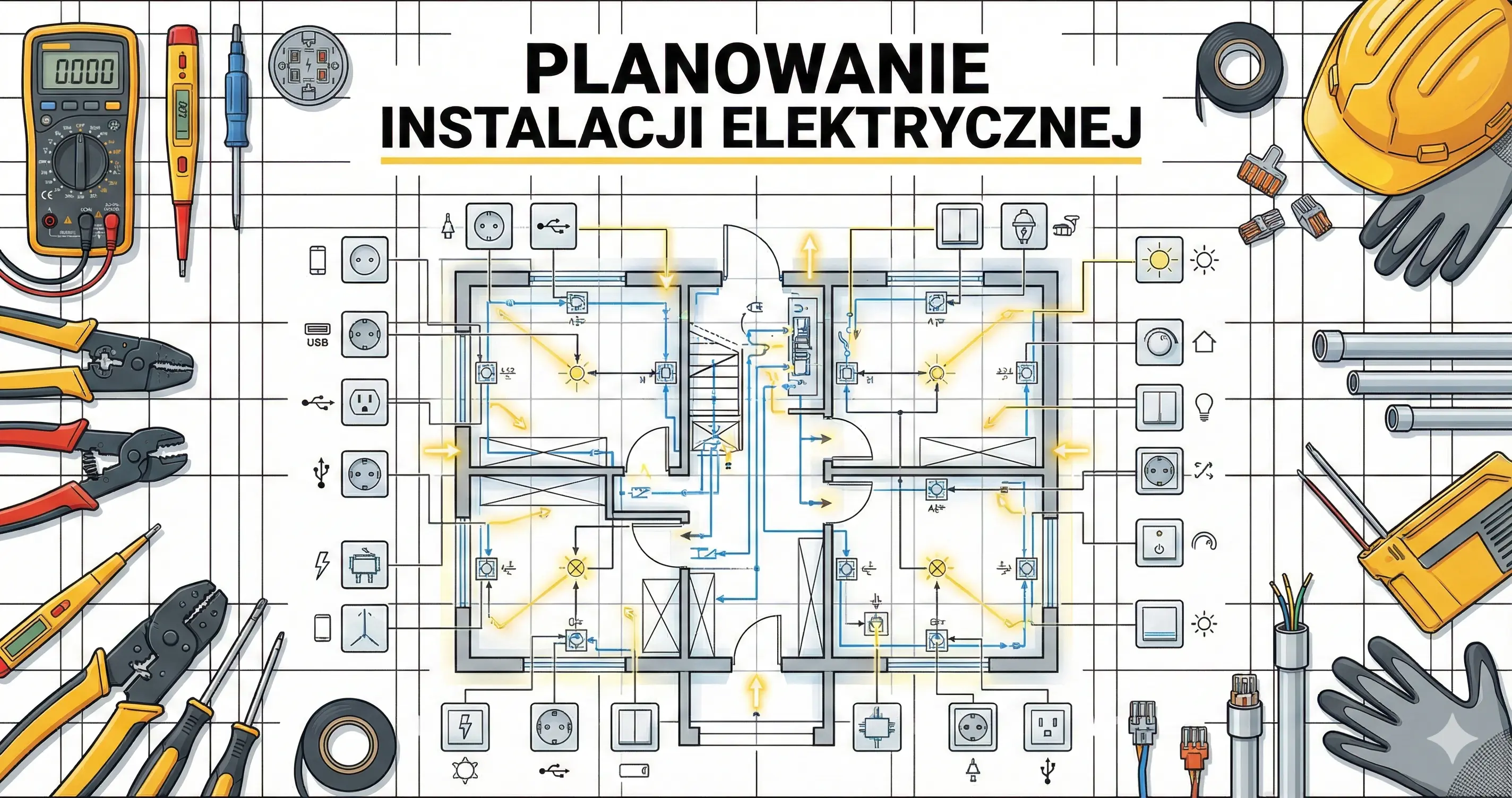
Planning an electrical installation in a home is a key stage of construction. Errors made during this process are extremely expensive to correct after plastering the walls. A well-thought-out plan saves money, nerves, and ensures comfort for years.
What is electrical installation planning?
Electrical planning is the process of designing the location of sockets, switches, cables, and distribution board before construction. It includes:
- Determining the number of circuits (lighting, sockets, high-power appliances).
- Planning socket distribution in each room.
- Selecting cable cross-sections and circuit breaker ratings.
- Designing the distribution board.
Basic Rules of Electrical Planning
Number of Circuits
Never skimp on circuits! A modern home should have at least several dedicated circuits:
- Lighting circuits – separate for each floor.
- General socket circuits – 6-8 sockets per circuit.
- Dedicated circuits – oven, induction hob, washing machine, dishwasher, heat pump.
Minimum Number of Sockets
Room standards worth remembering:
- Kitchen: Minimum 8-12 sockets (worktop, island, appliances).
- Living room: 10-14 sockets (TV, sofa, lamps, vacuum cleaner).
- Bedroom: 6-10 sockets (bedside tables, TV, dressing table).
Futureproofing
Today you might only have a fridge, but in a few years? Consider cables for:
- EV charger in the garage
- Heat pump
- Photovoltaic installation
- Air conditioning
With Electro Planner, you can easily design and visualize the entire installation, generate a list of needed materials, and export documentation for the electrician.
Related Guides
Also see: Electrical Design Guide, B10 vs B16 Circuit Breaker? Simple Rule: 1.5mm²→B10, 2.5mm²→B16 and Electrical Installation Diagram.
Want to design your electrical installation?
Try our Electro Planner app and create a professional project in minutes. Avoid mistakes and save time.
Start free project