How Many Electrical Circuits in a Kitchen? Complete Planning Guide
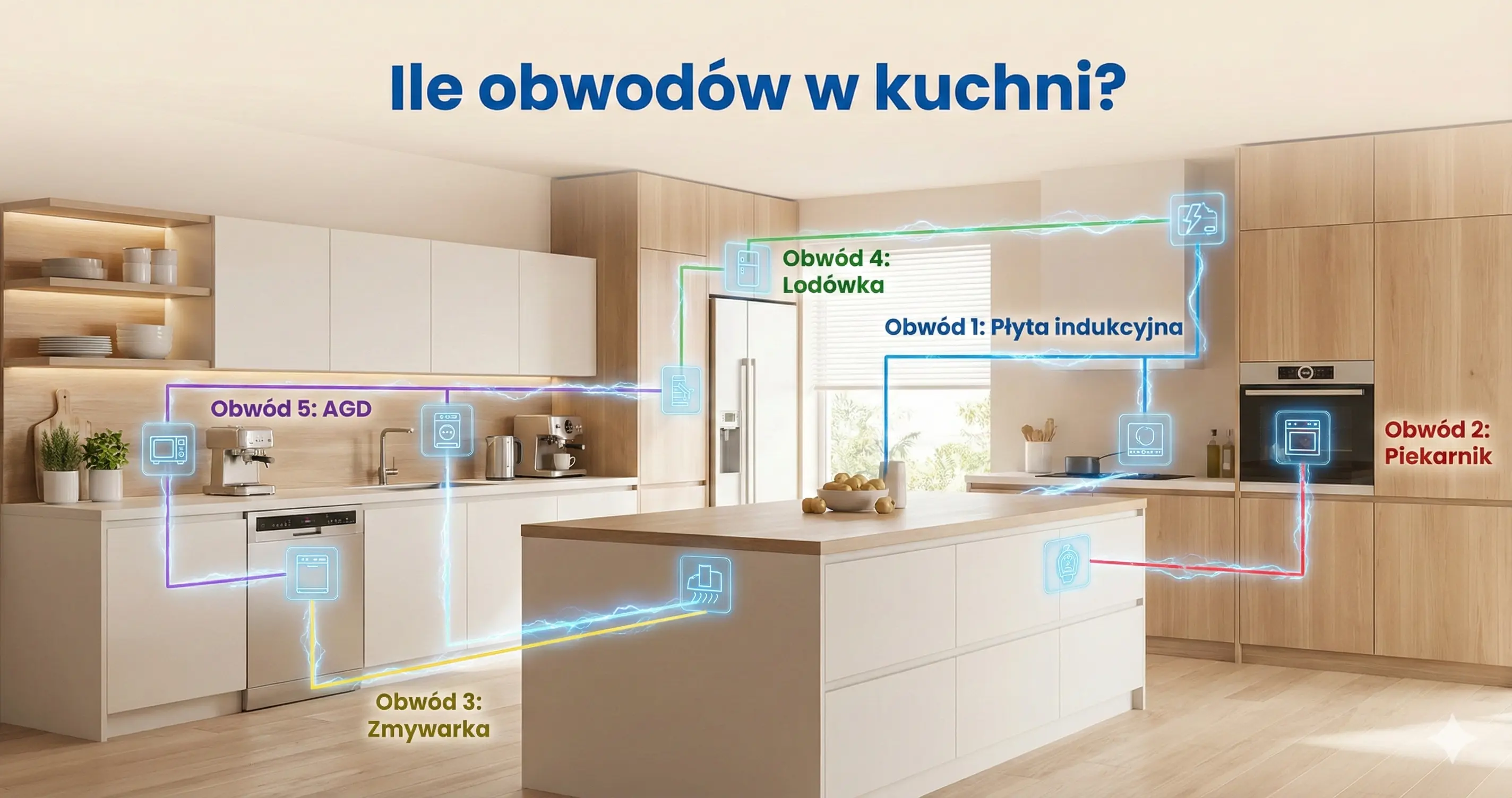
The kitchen is the most "electrically intensive" room in the house. The induction hob alone can draw up to 7kW! Improper circuit planning leads to breaker trips, overheating cables, or the inability to connect all appliances. Let's check how many circuits a kitchen needs.
Dedicated Kitchen Circuits
Some appliances require their own dedicated circuit:
- Induction hob: 5x2.5mm² or 5x4mm² cable (3-phase power supply recommended)
- Oven: 3x2.5mm² cable, C16 breaker
- Dishwasher: Separate circuit with RCD protection
- Refrigerator: Ideally dedicated circuit (prevents food spoilage during other trips)
- Extractor hood: Can share lighting circuit if low-power
How Many Countertop Sockets?
This is where people skimp most, and regret it most:
- Minimum: 4-6 countertop sockets
- Optimal: 8-12, including USB ports
- Think about: Kettle, toaster, coffee machine, blender, mixer, food processor, charging devices...
Common Kitchen Electrical Mistakes
- One circuit for the entire kitchen – recipe for constant breaker trips
- Sockets only in corners – no power where you actually work
- No socket for the refrigerator – plugged into an extension cord behind furniture
- Too few sockets above the countertop – extension cords everywhere
In Electro Planner, you can drag kitchen appliances onto your floor plan and the app will automatically suggest the appropriate number of circuits, cable cross-sections, and circuit breaker ratings.
Related Guides
Also see: Electrical Installation Software, Electrical Installation Planning and B10 vs B16 Circuit Breaker? Simple Rule: 1.5mm²→B10, 2.5mm²→B16.
FAQ
How many circuits does a kitchen need?
A modern kitchen requires 4-7 dedicated circuits: refrigerator (B10/1.5mm²), dishwasher (B16/2.5mm²), electric oven or hob (B20-B32/4-6mm²), microwave (B16/2.5mm²), and worktop socket circuits (B16/2.5mm²).
Does a refrigerator need its own circuit?
Yes. A refrigerator should have its own dedicated B10 circuit on 1.5mm² cable to prevent interference from other appliances and avoid nuisance tripping when the compressor motor starts.
What circuit breaker size for an electric oven?
An electric oven up to 3.5kW needs a B16 on 2.5mm² cable. For combined oven/hob units up to 7.2kW, use B32 on 6mm² cable. Always check the appliance data plate for exact power requirements.
Want to design your electrical installation?
Try our Electro Planner app and create a professional project in minutes. Avoid mistakes and save time.
Start free project