
Electrical Installation Diagram | How to Read and Create Wiring Diagrams
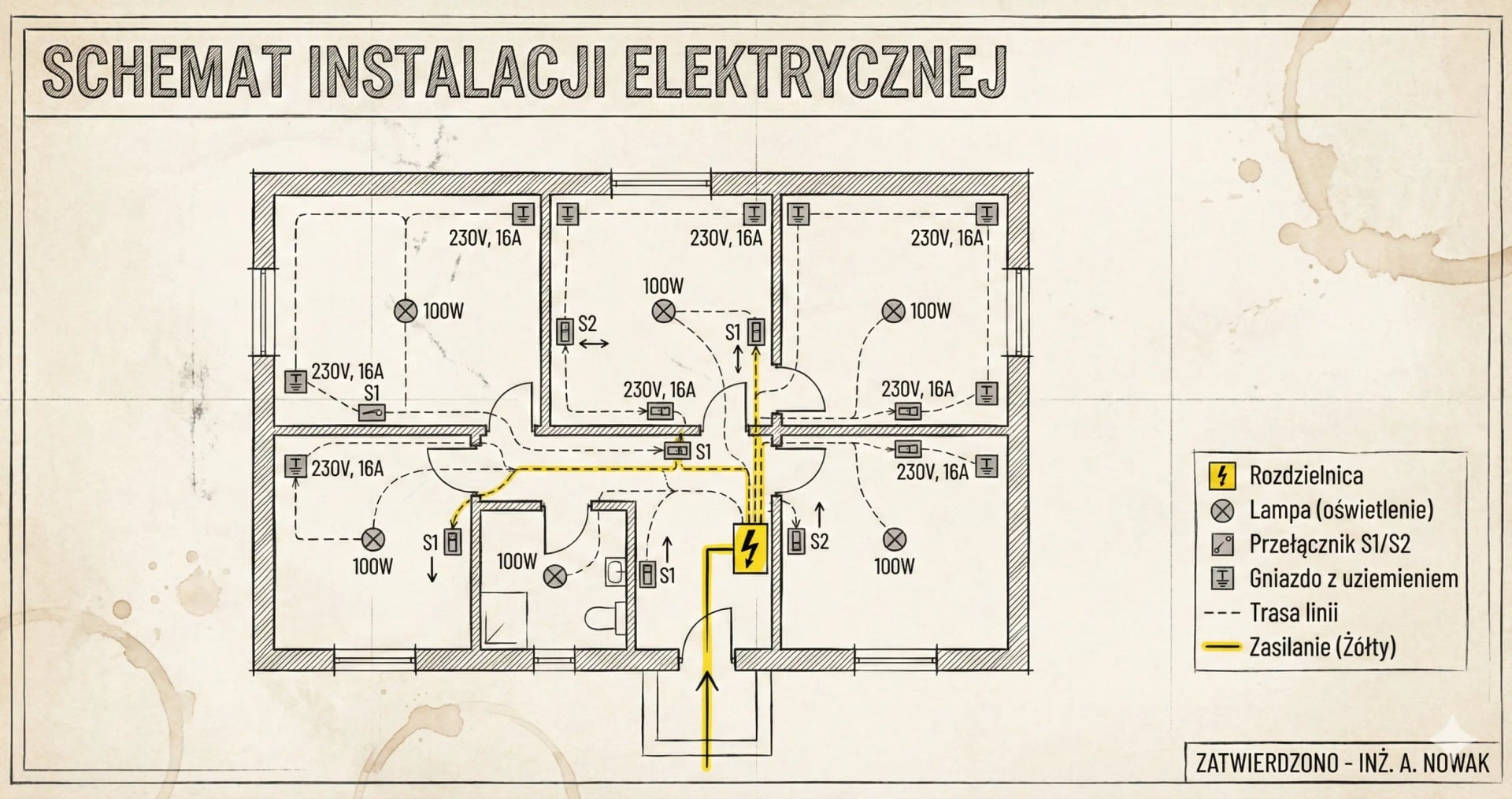
An electrical installation diagram is a graphical representation of the electrical installation - the location of devices, cable runs, and connections. It's an essential document for both the electrician performing the work and for future diagnostics and modifications. Let's learn how to read an electrical diagram and which symbols are worth knowing.
Electrical Diagram Types
In home construction, we most commonly encounter:
- Floor plan diagram: Shows device placement on the floor plan (sockets, switches, junction boxes).
- Distribution board diagram: Shows the arrangement of modules on DIN rails and connections between them.
- Single-line diagram: Simplified representation of the entire installation (circuits, protections).
The Most Important Electrical Symbols
Learning all symbols by heart isn't necessary - key ones are standard:
- ○ – socket
- ⊗ – ceiling light
- ☐ – single switch
- ☐☐ – two-way (staircase) switch
- ▽ – RCD
- rectangular symbol – MCB (circuit breaker)
Why Is a Diagram Important?
Without documentation, any future modifications become guesswork. An electrician without a diagram doesn't know which cable goes where, which circuit breaker protects which circuit.
In Electro Planner, you place elements on an interactive floor plan, and the app generates a professional electrical diagram with all symbols and descriptions automatically.
Related Guides
Also see: How to Design a Distribution Board? Complete Guide for Home Installations, B10 vs B16 Circuit Breaker? Simple Rule: 1.5mm²→B10, 2.5mm²→B16 and Electrical Design Guide.
Want to design your electrical installation?
Try our Electro Planner app and create a professional project in minutes. Avoid mistakes and save time.
Start free project